


AI Bible Translation in Australia: How Our Team Is Helping Keep Aboriginal Languages Alive
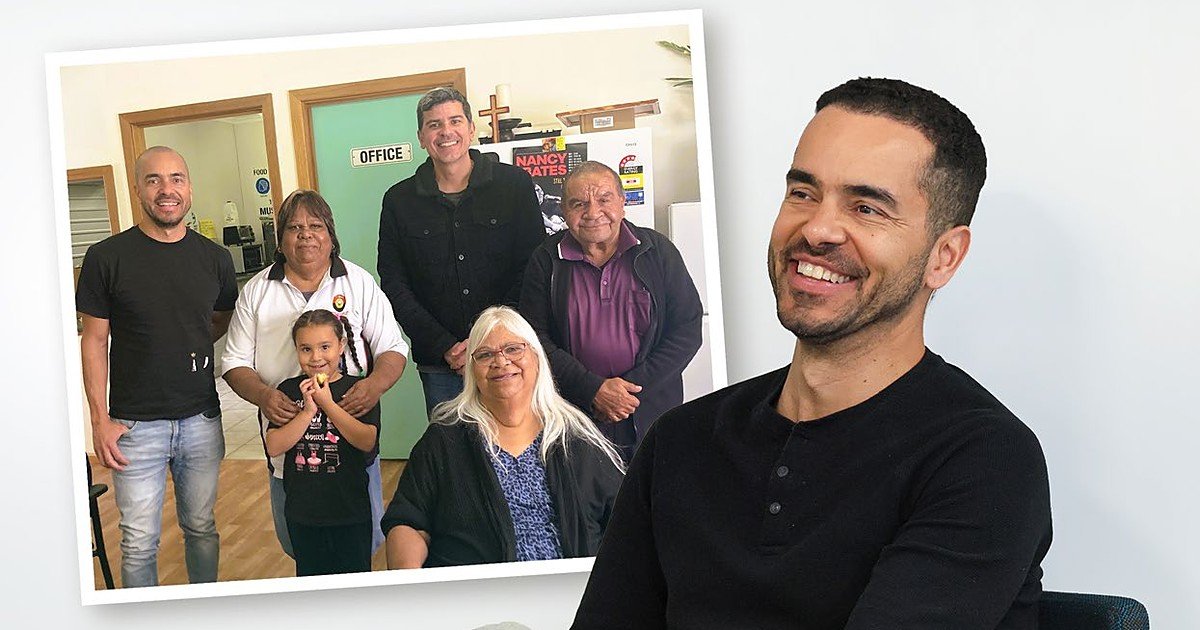
We spend most of our days building AI agents, automations and custom apps for Australian businesses. But one of the projects we're proudest of has nothing to do with invoices, rosters or reports. It's about language. Our work in AI Bible translation is about making sure communities can hear, read and keep their own.
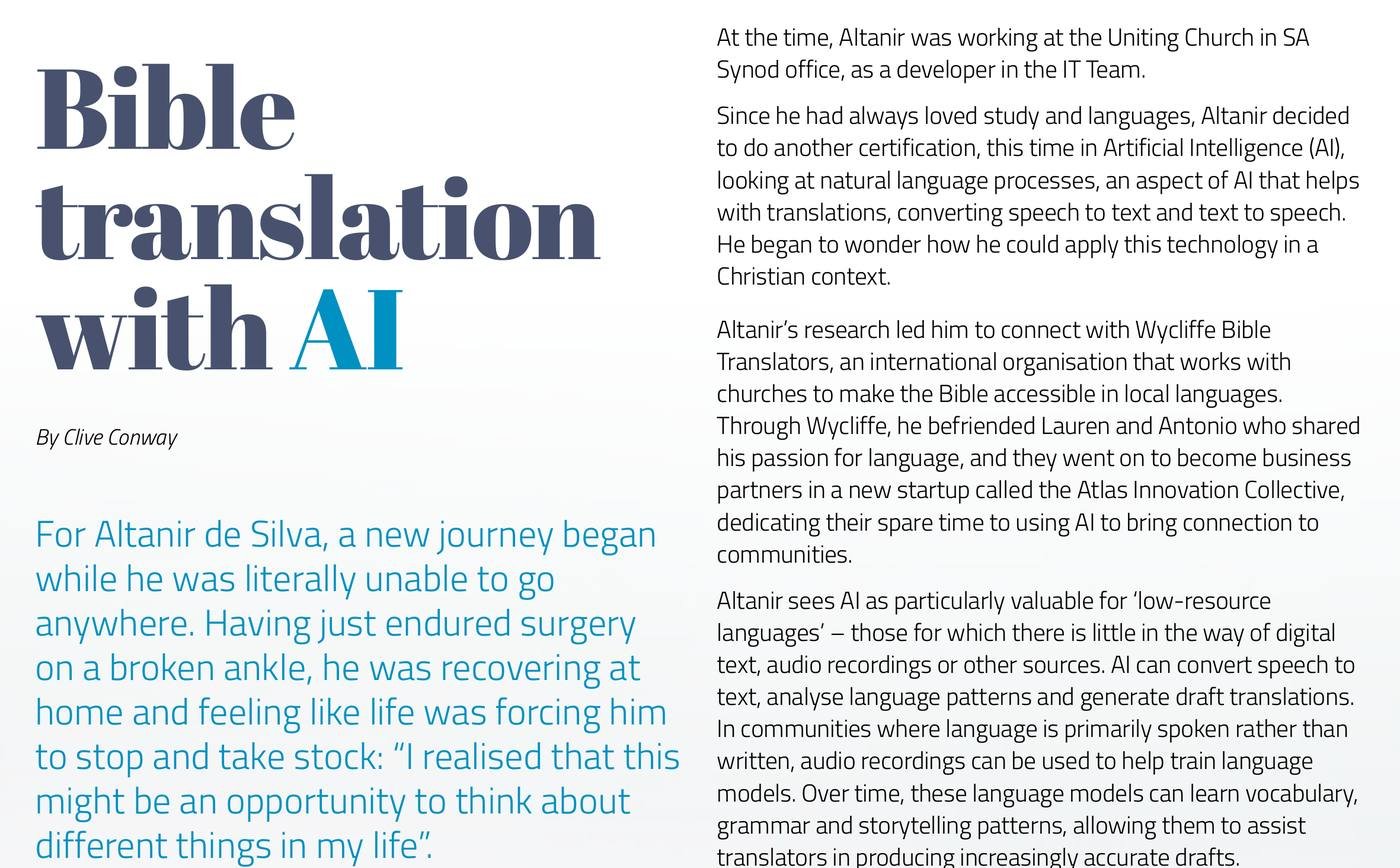
This month, that work was featured in New Times, the magazine of the Uniting Church in South Australia, in an article by Clive Conway titled "Bible translation with AI". We're honoured to share the story here.
How it started: a broken ankle and a big question
The idea began in an unexpected place. While recovering at home from ankle surgery, Altanir — then a developer in the IT team at the Uniting Church SA Synod office — used the downtime to complete a certification in Artificial Intelligence, focusing on natural language processing: the branch of AI behind translation, speech-to-text and text-to-speech.
That raised a question he couldn't put down: could this technology help people access the Bible in their own language?
His research led him to Wycliffe Bible Translators, where he connected with Antonio. Sharing a passion for language, they went on to form the Atlas Innovation Collective, giving their spare time to using AI to bring connection to communities.
Why AI matters for "low-resource" languages
Most AI translation tools are trained on huge amounts of written text. That works for English or Spanish, but many First Nations languages are primarily spoken, with very little digital text or recorded audio available. These are known as low-resource languages.
This is where AI can genuinely help. It can convert speech into text, learn vocabulary, grammar and storytelling patterns from a small collection of sources, and produce first drafts that human translators can then refine — speeding up work that would otherwise take years.
The Adnyamathanha Community Project
Through conversations at Uniting College of Leadership and Theology, Altanir was introduced to Aunty Denise Champion and others working on language revitalisation and Bible translation for the Adnyamathanha language of the Flinders Ranges. The question put to us was simple: how could AI assist?
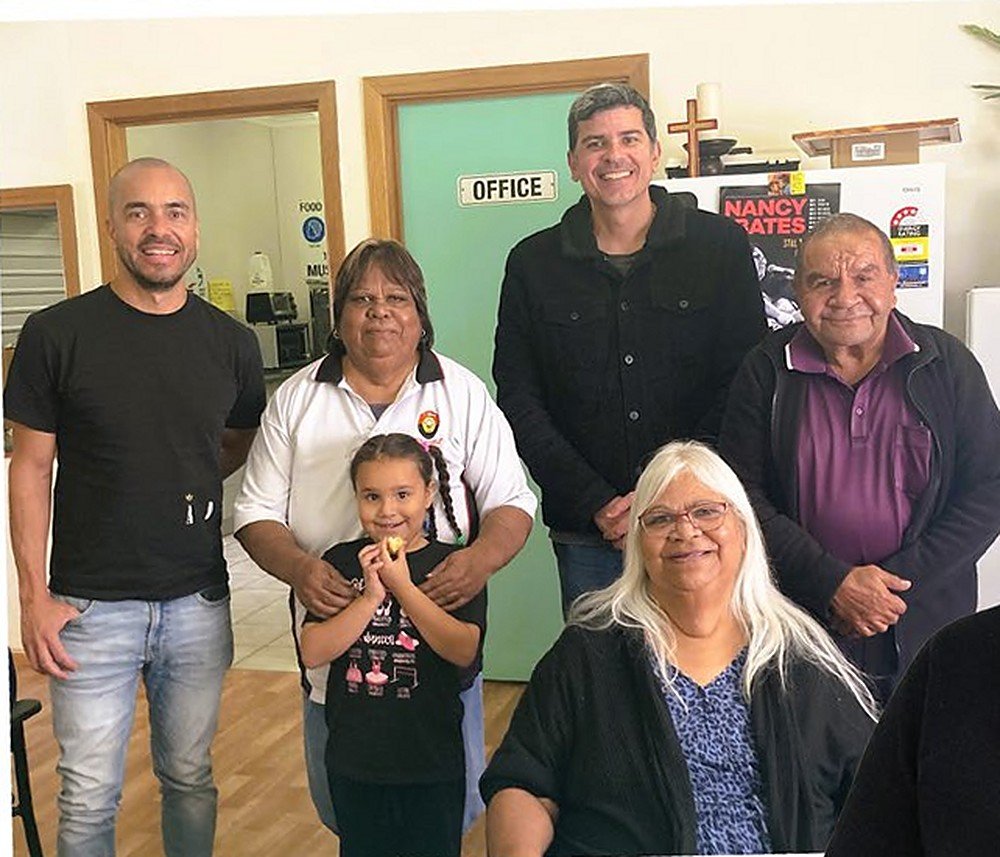
The first stage wasn't Bible translation at all — it was a proof of concept. Working with stories written by Aunty Denise, the team used AI tools to create videos in Adnyamathanha, including one narrated using a sample of Aunty Denise's own voice.
To train the model, we drew on a small set of trusted sources: the 400-page Adnyamathanha Culture Guide and Language Book by Terrence and Joise Coulthard, Aunty Denise's own books of stories, and direct feedback from native speakers and community members. The early drafts had plenty of mistakes — but they showed enough promise to prove that AI can produce usable first drafts for language experts to correct and improve.
How AI Bible translation works — step by step
We run the same task through several leading large language models — including Anthropic's Claude, OpenAI's ChatGPT and Meta's Llama — and compare the results. Then the people who matter most decide which version is most accurate and culturally appropriate.
Train on existing resourcesBooks, stories, dictionaries and recordings from the community are used to train the model.
Generate draft translationsThe AI produces first drafts, often across multiple models for comparison.
Community reviewNative speakers and community members review and correct the drafts.
Feed corrections backEvery correction goes back into the system as new training data.
Improve over timeWith each cycle, the model gets more accurate.
Beyond Bible translation
Bible translation is the focus, but the bigger picture is the preservation of language and culture. By recording speech, generating text and building digital tools younger generations can actually use, AI can help keep endangered languages alive.
What this means for your business
The same skills that power this project are the ones we use with clients every day. If AI can learn a language from a handful of books and recordings, imagine what it can do with your quotes, inspection reports, emails and spreadsheets.
Smart assistants that draft, check and process work for your team. Learn more
Apps and automations built on the Microsoft tools you already own. Learn more
Real-time translation for churches and events with OneLinguo.
Web and mobile apps built around how your business works. Learn more
Frequently asked questions
Can AI really translate Aboriginal languages?
AI can produce useful first drafts, even for languages with very few written resources. But it doesn't replace people — community members and language experts review, correct and approve every draft.
Which AI models do you use?
We use leading large language models, including Claude, ChatGPT and Llama, and compare their outputs so the community can choose the most accurate and culturally appropriate result.
What is a "low-resource" language?
A language with little digital text, audio or other material available. Many First Nations languages fall into this category because they're primarily spoken rather than written.
Can SimpleIT4U build AI solutions for my organisation?
Yes. We build AI agents, automations and custom software for businesses, churches and not-for-profits across Australia — remotely or on-site in Adelaide.
Let's build something that matters
We're grateful to Aunty Denise, Aunty Cynthia and the Adnyamathanha community for trusting us with their stories, and to the New Times team for sharing this work.
Got an idea where AI could help?
Whether it's saving your team hours every week or a project with real community impact, we'd love to hear about it.
Talk to SimpleIT4U →